
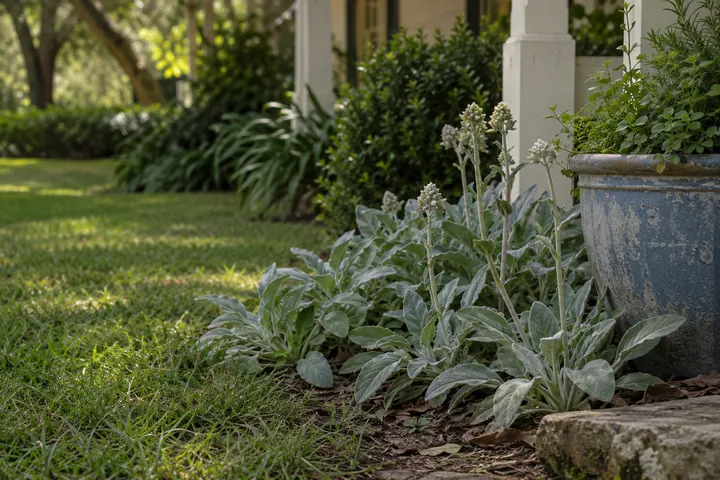
Begin with the group rather than an exact species claim
Sometimes the most useful first identification is a group with a clear limit. NC State explains that cudweeds include several similar species. Its account describes basal rosettes, fine white woolly fibers on leaves and heads, and later upright stems in its regional seasonal setting. Some members show the fibers mainly on leaf undersides, while others have more extensive coverage. Those differences make the surface being photographed especially important.
A homeowner can begin by asking whether the example fits a cudweed comparison without announcing an exact species. Give the rosette a fixed location label, such as blue-gray-pot example. Keep that label when the candidate changes. It lets the practical lawn discussion remain clear even if a qualified reviewer needs a closer feature or a later stage before making a more precise botanical determination.
Upper and lower are observation labels
A curled leaf can expose both surfaces in one frame, but the viewer may not know which is which. Show the attached leaf's orientation in a wider image before adding a close detail. Label the surface actually visible. Do not assume that every pale area is an underside or that a darker surface must be the upper one simply because that interpretation fits the candidate description.
If a leaf was turned or detached before the photograph, say so and preserve any intact view. The handling history helps another person understand what the image can establish. A clear record might show the upper surface on the attached example and a separately labeled underside detail requested by a reviewer. It should not quietly switch between leaves from several plants while presenting them as two sides of one documented blade.
A pale coating and a visible fiber pattern are different evidence
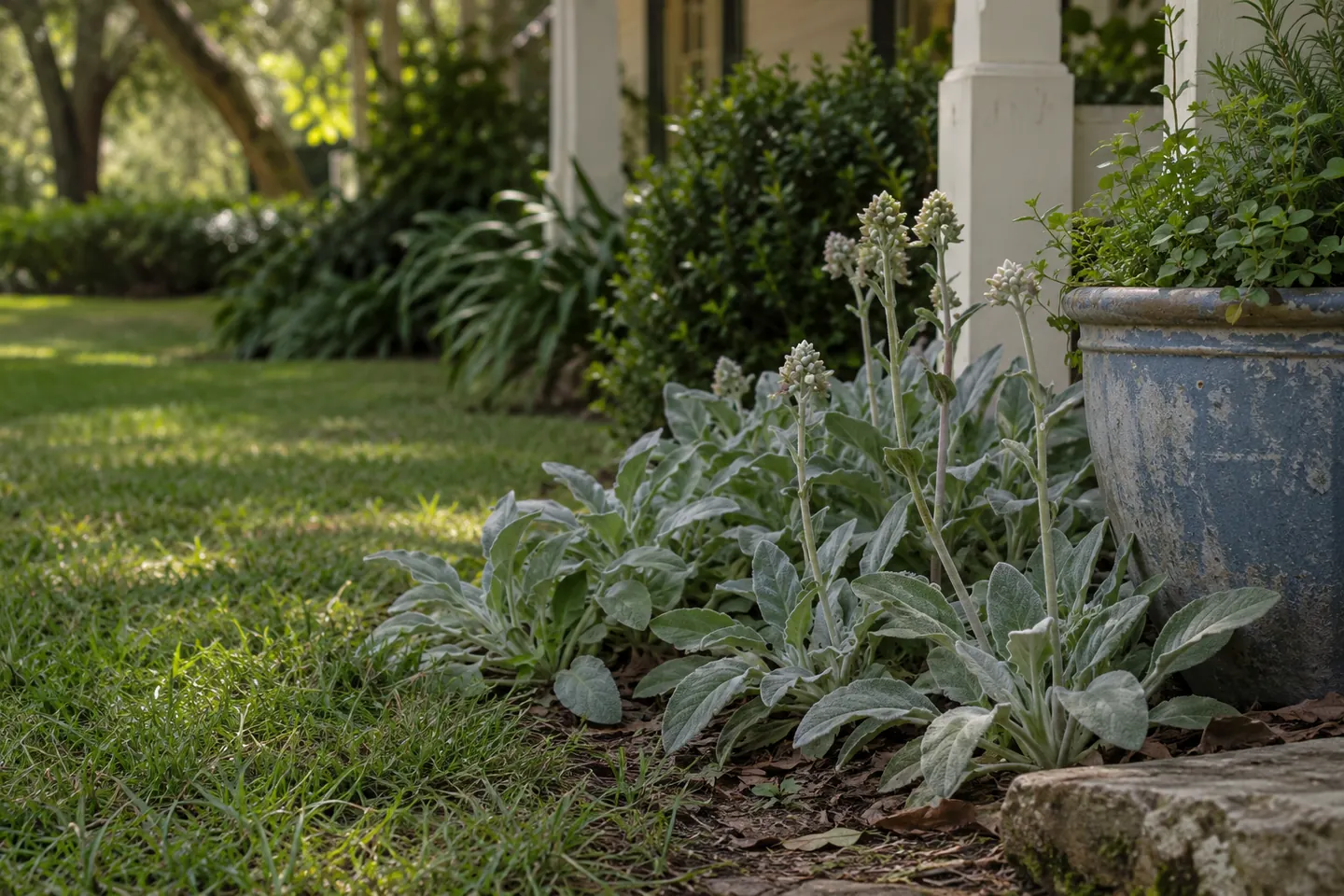
Silvery color can be an initial description, but it is not the same as a readable close view of fine fibers. Ordinary glare, a soft photograph or material resting on a leaf may complicate what the camera records. Explain whether the image resolves a texture or only a pale tone. A qualified reviewer can then decide how much weight that observation carries.
There is no need to rub the leaf, apply water or stage a cleaning test to produce a more definite-looking answer for routine lawn help. Keep the intact view and ask what additional evidence is appropriate. Unrecorded manipulation can change the surface before its original condition was preserved. The useful goal is a traceable observation, not a demonstration designed to make the plant fit the first name found online.
Keep the rosette center readable
Several low plants can overlap into one silvery-looking patch. Show the center of the selected example where its leaf attachments can be followed. If the center is hidden under turf or another leaf, keep that limitation explicit. A photograph of a circular outline does not by itself prove that every visible leaf belongs to one crown.
A second rosette can be a useful comparison when it is separately labeled. Do not borrow its clearest leaf and assign it to the first plant without explanation. The reviewer may find one example more informative or decide that the patch contains different plants. Separate records leave room for that answer while retaining the fixed location of each lawn concern beside the pot or along the border.
Connect an upright stem before calling it the next stage
The regional reference describes a transition from a low rosette toward an upright stem. If both are visible in the same area, show their connection before treating them as one individual. A taller stalk behind a low plant may originate elsewhere. Keep the main stem, the lower attachment and enough surrounding space in a frame that another person can follow the route.
For photographs made on different dates, explain whether the same crown was marked and revisited. An earlier silvery rosette and a later pale stalk in approximately the same corner are not automatically a continuous life history. They can still support separate comparisons. Clear dates and example labels keep a useful collection from becoming an invented sequence with every feature apparently observed on one plant.
The head photograph needs its own purpose
A pale cluster at the top can show where heads occur without revealing their fine surface. Decide whether the image is an overview or a close structural detail and caption it accordingly. The viewer should not have to guess whether the white area is a readable fiber covering, a flower cluster or simply a bright region that the camera cannot resolve.
Retain an original file with any cropped copy. If the crop comes from the same image, keep matching labels so the relationship is obvious. If the close head belongs to another example, say that instead. A reviewer can use a comparison honestly when its origin is clear. Replacing an unclear original with a sharp image from a different plant may make the record look stronger while weakening the actual connection being reviewed.
A group answer can still guide the next observation
If the reply is consistent with cudweed but not identified to species, preserve that limit. Ask which additional feature would make a finer distinction useful and whether a specimen is appropriate. You do not need to turn every provisional answer into a final label before discussing the visible lawn area. An accurate group-level conclusion can be more useful than a species name attached to insufficient evidence.
Keep a brief note separating the identification result from the proposed lawn work. The first may concern surfaces and heads, while the second concerns a low patch's appearance or an accessible border. A plant reviewer and a lawn provider may answer different parts of the conversation. Let each answer remain tied to its own question rather than treating a botanical opinion as an automatic instruction for a particular maintenance operation.
Do not turn silver foliage into a soil prescription
The color and surface of a candidate plant do not establish the yard's soil chemistry, drainage or maintenance history. Record any separate surface observation directly, such as a dry-looking gap or a shaded pot-side strip. Leave an unmeasured cause open. A photograph of a woolly leaf cannot replace the evidence needed for a property assessment.
This matters when someone suggests that changing every lawn practice will solve the patch. Ask what observation supports that recommendation and which question has actually been answered. A routine mowing discussion should not inherit an unrequested soil-correction plan. Happy can review the included area and visible finish while a different question about growing conditions remains clearly separate and appropriately unresolved.
Mark the pale patch from the view you normally use
Take one photograph from the porch, path or other ordinary viewing point that explains why the area stands out. A beautiful macro photograph cannot show how a low pale rosette reads across the whole lawn. State whether the concern is color contrast, raised stems, several isolated plants or a continuous-looking low layer. The work discussion needs that practical context.
Use fixed boundaries rather than a broad instruction to remove the silver plants everywhere. Identify the pot-side strip or other included area and confirm the mowing, edging, weed-eating or blowing being considered. A tidier visible surface is different from proof that a perennial or annual candidate's entire future presence has been resolved. Judge the result against the actual routine scope agreed for the marked location.
Preserve what a later photograph can and cannot show
After routine work, a head or upright stem may no longer be available. Save the earlier dated evidence instead of pretending the current low view contains the same information. Explain which feature was present before and which is now missing. A reviewer can assess the remaining material more effectively when the change in the evidence set is explicit.
If a new pale example appears near the original location, give it a separate label until continuity can be shown. A similar color is not proof of the same individual or an exact regrowth timeline. The useful follow-up describes the current appearance and the agreed work, while preserving the limits of the identification record. That keeps the conversation focused on what another person can actually review.
- Label the upper and lower surfaces separately.
- Distinguish a pale tone from readable woolly texture.
- Show the rosette center and any upright-stem connection.
- Preserve a group-level answer when species evidence is missing.
- Keep soil assumptions outside the plant comparison.
Review the silvery patch with Happy
Call 504-339-3571 and ask for Happy. Describe the marked lawn area, access and the mowing, edging, weed-eating or blowing you want discussed. Confirm the work and availability before arranging a visit.