
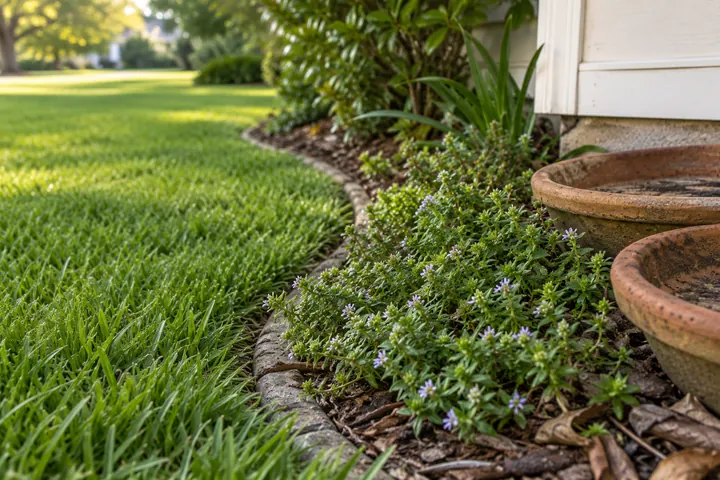
Choose a small example inside the larger patch
A photograph of the entire low patch explains where the concern is, but it may not resolve the plant's structure. Choose a readable stem section within it and give that example a simple location label. Clay-saucer mat one can remain useful through a revised identification. The fixed label also gives Happy a practical area to discuss without requiring a final botanical name first.
University of Georgia describes Sherardia arvensis, field madder, as a low mat-forming winter annual in its regional account. Its stems are square, the pointed elliptical leaves occur in whorls of four to six, and pink-to-lavender flower clusters sit at stem ends. Those relationships provide a comparison to review. A low green mat or a single tiny lavender dot does not establish that all of them are present on the pictured example.
Separate adjacent nodes before counting leaves
An overhead image can merge two nearby nodes into one crowded star. Include a visible stretch of stem above and below the node being counted. Mark its location in an annotated copy while retaining the unmarked original. The reviewer should be able to tell which attachments belong to that point and which belong to the next point along the stem.
Record only the connections the photograph actually resolves. If part of the far side is hidden, explain the obstruction instead of presenting a precise complete number. A count copied from the reference is not an observation of your plant. Leaving the missing side unresolved gives a qualified reviewer a useful reason to request another angle rather than forcing an uncertain image into a confident identification.
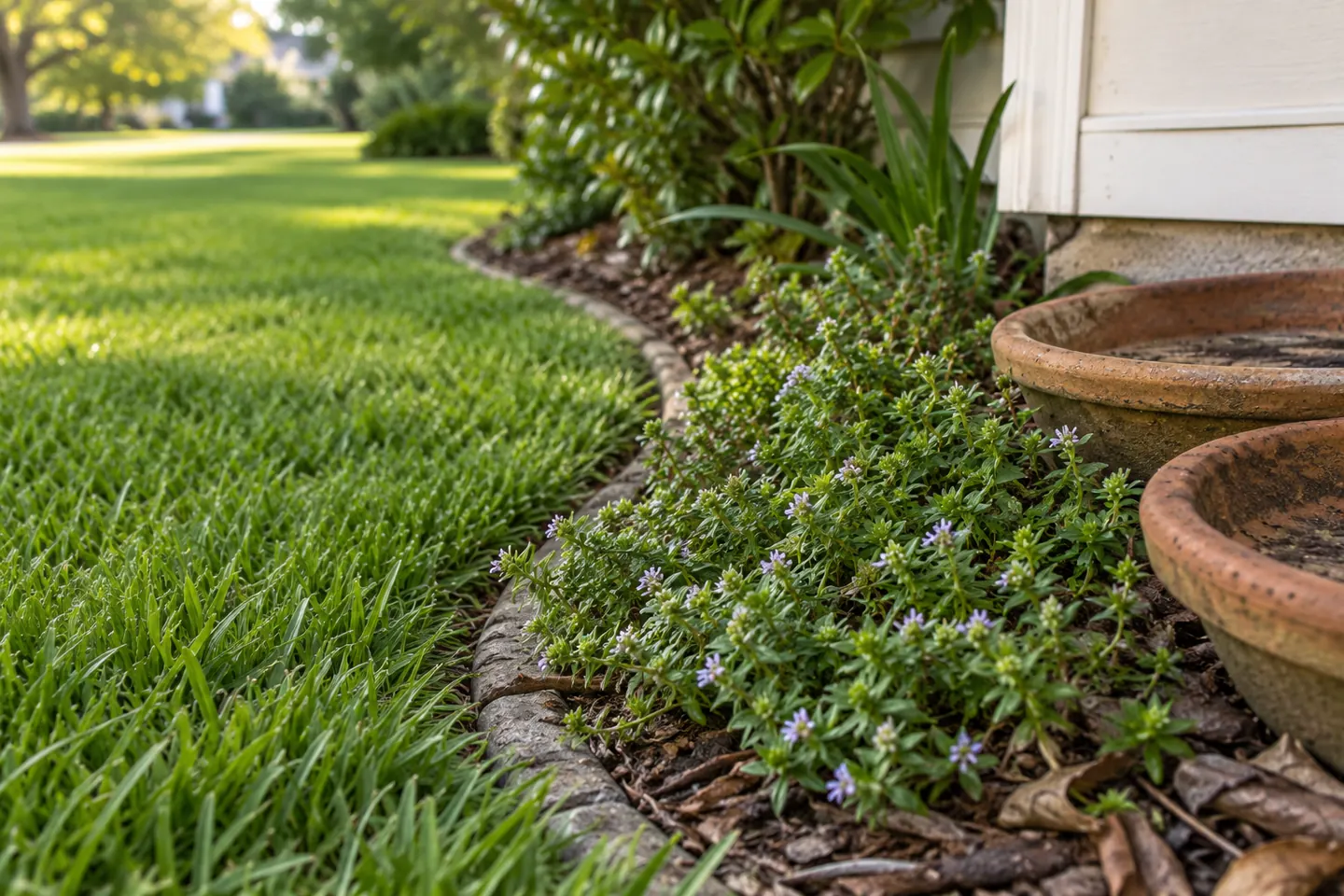
A pointed tip needs the rest of its leaf
A tiny sharp-looking green mark can be a leaf tip, a crossing blade or an image artifact at the edge of a crop. Show the full attached leaf where practical, including the margin and its route toward the selected node. Keep a wider frame so the close detail has a clear source. An isolated tip without context can be difficult for another person to interpret.
If another example provides a clearer leaf, label it as a separate comparison. Do not assign its shape to the first stem merely because both are in the same mat. A mixed patch can contain several plants with similar colors and different structures. Separate example records let a reviewer explain that one detail fits the candidate while another still needs evidence, without losing the actual location of either observation.
Follow the stem to its flowering end
The UGA description places flower clusters at the ends of stems. Show that terminal relationship rather than only enlarging the nearest lavender bloom. A flower above a low mat may originate on another plant behind it. Trace the supporting route where visible and mark any gap where grass, a leaf or another stem conceals the connection.
A useful picture set can contain an overview of the selected stem and a closer attached end view. The two images answer different questions: where the structure belongs and which details are readable. Keep their labels consistent. If the closer flower came from another example, say so plainly. A comparison remains valuable when it is not disguised as a single plant carrying every conveniently photographed feature.
Tiny flower color should not carry the entire answer
Phone cameras can render small pale flowers differently in sun and shade. Preserve an ordinary-color original and explain any adjustment used in a shared crop. Describe the color as part of the record while retaining the node and terminal-position evidence. A familiar lavender tone does not replace those structural observations or rule out a different candidate when the rest of the image is unclear.
When two examples are being compared, use reasonably similar lighting and label them separately. State whether a difference was visible in the yard or appeared only after the pictures were viewed on a screen. Do not build a soil or plant-health diagnosis around a color impression that the record does not independently support. The identification inquiry can remain focused while a separate property question stays open.
Compare whorled plants without a one-number shortcut
Another narrow-leaved plant may look similar because its leaves also seem arranged around a stem. Keep it under its own example label and document its flower position and overall route as well as the readable node. A single uncertain leaf count should not become the whole species comparison. The reviewer needs to know whether the same node and supporting stem were actually followed.
Write the comparison in observable terms. One example might appear as a compact patch near the saucer while another supplies a long loose stem elsewhere. Those are useful descriptions of the available views, not final conclusions based on habit alone. Preserve each record's limits so an expert answer can improve the identification without forcing every whorled-looking plant into one convenient common name.
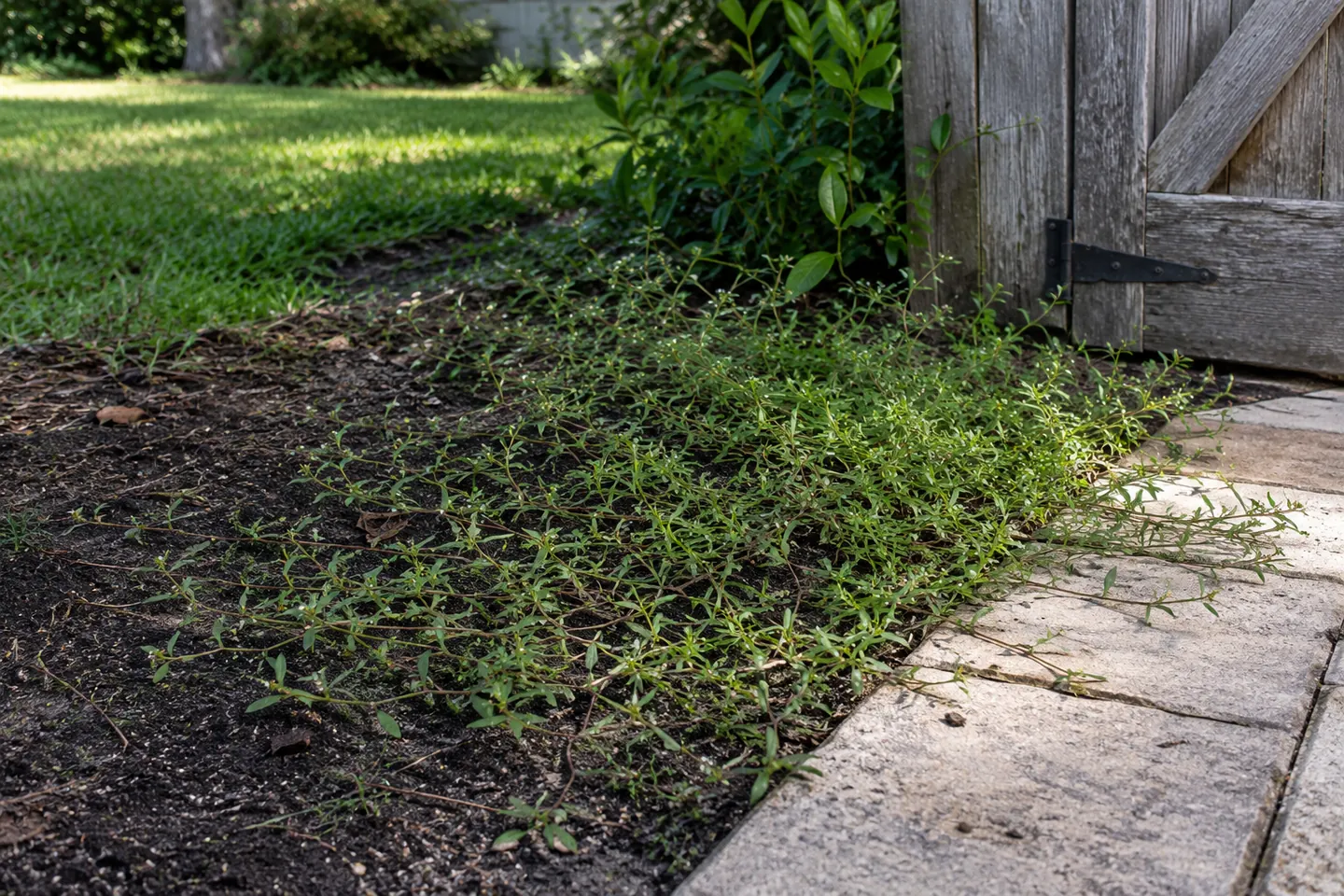
A square stem is not a reason to stage a cutting test
The reference's stem description can guide a qualified review, but a routine lawn inquiry does not require breaking an unidentified plant to display a cross-section. Keep any readable intact view and ask which further observation would be useful. A photograph of one sharp highlight along a stem may not resolve its shape as confidently as the caption suggests.
If a stem was already damaged, explain that condition and retain any earlier intact image. Do not assign a tool, person or exact date to the damage unless it was observed. A cut or broken end and the leaf-node relationship can be photographed separately so the reviewer knows which feature each image addresses. This keeps an unverified history from becoming part of the botanical comparison.
The low mat and the ground beneath it are separate observations
Show whether the patch occupies maintained turf, an open soil gap or the edge beside a pot or saucer. A continuous-looking mat does not establish the condition of every surface beneath it. Describe what the overview can show and leave hidden ground conditions unmeasured. The candidate plant's presence is not a substitute for an assessment of why the lawn is thin or how the area has been used.
A simple location sketch can mark the lawn edge and the particular patch without inventing a hidden root outline. That sketch is a work map, not a diagram of one connected individual. It remains useful if a reviewer later finds more than one species in the photograph. Keeping the visible plant footprint separate from the included grass area makes the routine visit discussion clearer.
Use dates that describe actual checks
The winter-annual label in a regional source does not establish an exact appearance date for a West Bank yard. Record first notice, the first readable terminal flower and any later visit as separate observations. If the patch was not checked before the first photograph, leave its beginning unknown rather than assigning it to the most recent maintenance event.
Keep a fixed viewpoint for later comparisons and note whether the same stem remains available. If the terminal flowers have been cut or otherwise changed, preserve the earlier dated image instead of replacing it with another example. A new flower view may be useful, but it answers a different continuity question. Honest labels let a reviewer understand both the earlier evidence and the present lawn condition.
Define the finish for the actual saucer-side area
Explain whether the concern is the low texture, raised flowering tips or a boundary where the patch crosses toward the lawn. Show that concern from an ordinary viewing position rather than relying entirely on macro photographs. Happy should receive a clear description of the included area and desired visible result, not an assumption that the candidate name already defines the task.
Confirm which mowing, edging, weed-eating or blowing is proposed. A shorter flowering top is different from proof that every lower plant or future seed is absent. A later view should be evaluated against the agreed routine work. Keeping that scope explicit allows the identification question to remain useful without turning it into an unstated treatment, removal or soil-correction promise.
- Mark one readable node before recording a whorl count.
- Keep the whole pointed leaf with its attachment.
- Trace the terminal flowers to their supporting stem.
- Label a similar whorled example separately.
- Preserve unknown timing and hidden ground conditions as unknown.
Ask Happy about the low flowering patch
Call 504-339-3571 and ask for Happy. Describe the marked lawn area, current access and the mowing, edging, weed-eating or blowing you want discussed. Confirm the actual work and availability before arranging a visit.