
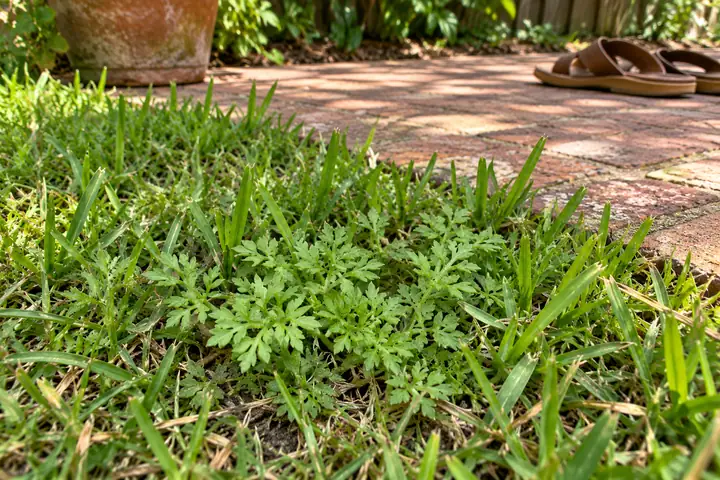
A tidy-looking lawn can still have a bur problem
The lawn may be short and green while a small patch makes ordinary yard use uncomfortable. Lawn burweed is worth considering when the concern is sharp burs close to the ground, but the word sticker does not identify a species. Begin with the plant and its structures. A useful description distinguishes fine low foliage, attached burs and loose material already present in the turf. Those are different observations, even when they occur in the same few square feet.
LSU AgCenter describes lawn burweed as a cool-season annual with low growth and finely divided leaves. Its small inconspicuous flowers are easy to miss. The important later feature is the hard spiny bur associated with its seed. Mississippi State Extension emphasizes that these burs can remain after the plant dies. That fact changes the maintenance conversation: killing or shortening a plant is not the same result as making a surface free of sharp material.
Inspect visually before using touch as a test
Do not identify a suspicious patch by walking barefoot through it. Look from a stable position and use a clear close view of the low foliage and any visible burs. If the details are too small to establish confidently, ask an extension office what sample or photograph would help. An uncertain identification should remain uncertain until there is enough evidence. A painful encounter is not a reliable botanical identification method.
Keep children and pets from being used as the test of whether the area is clear. Their usual route or play area is useful information for planning, but their contact should not become the inspection procedure. Record the location where burs have been noticed and whether similar foliage occurs nearby. The practical aim is to identify the affected area and obtain appropriate management guidance, not to prove every part of the lawn by direct exposure.
Distinguish finely divided leaves from grass and other broadleaves
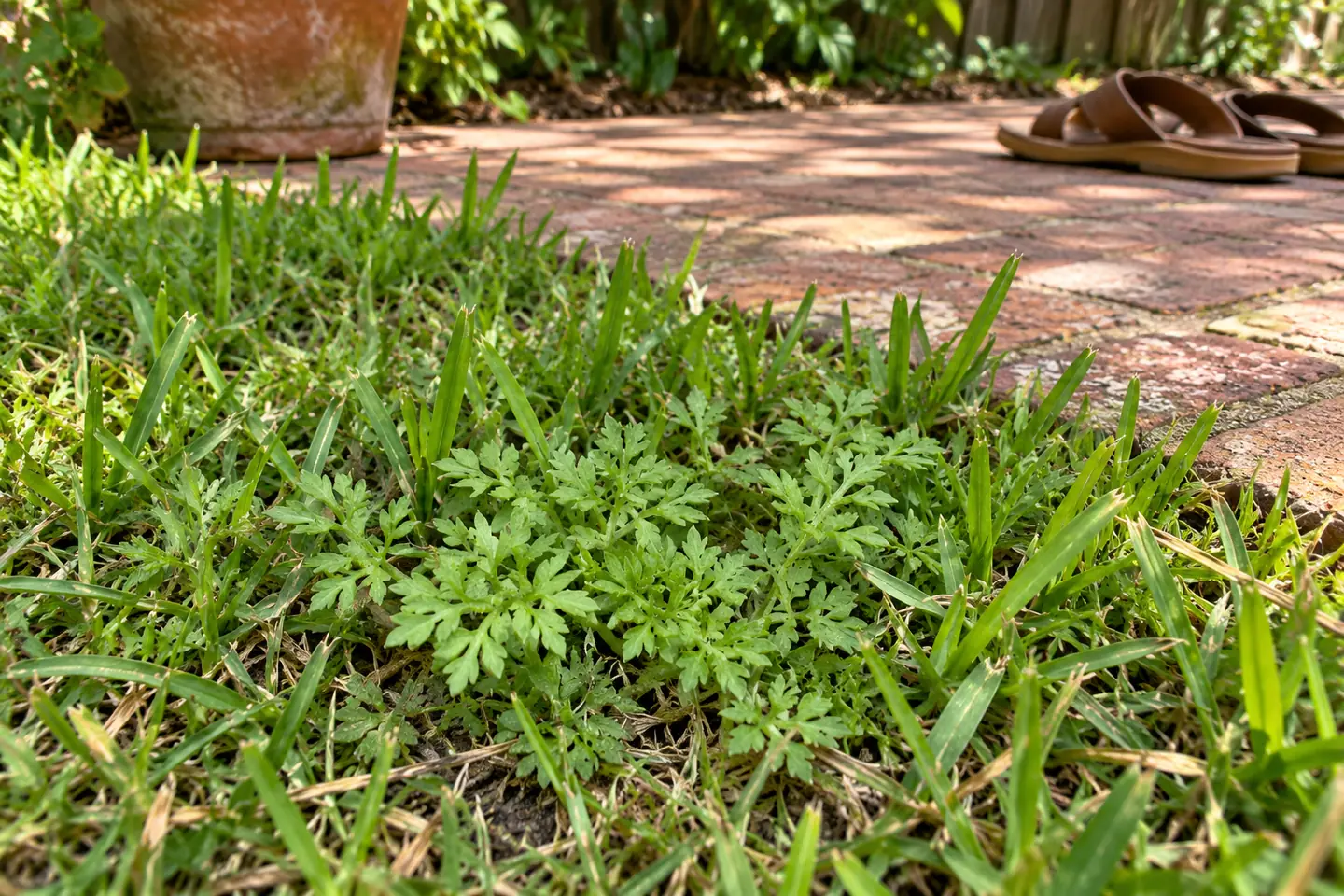
Burweed foliage can resemble a tiny parsley-like rosette, quite different from a grass blade. Look at several leaves arising from the low plant rather than a single broken piece. Compare their divided structure with the surrounding turf. Where a mat contains several species, identify which foliage actually bears the suspicious structures. A bur lying beside another plant does not prove that plant produced it.
This matters because sticker complaints can involve unrelated plants or material. A broad label such as sandbur or burweed may be used casually for anything prickly. Do not choose a treatment from the nickname alone. An intact plant, its leaf arrangement and its attached reproductive structures provide more useful evidence. If the plant is already dry and fragmented, explain that limitation instead of forcing a confident identification from a loose object.
The low winter stage deserves attention
The familiar spring complaint can begin with inconspicuous growth during cooler months. LSU's guidance emphasizes management before flowering and seed set. The useful homeowner lesson is to recognize the foliage early enough to discuss the plant before hard burs are the main feature. Do not wait for the first barefoot complaint to become the only signal that this part of the lawn needs attention.
Seasonal guidance is not an exact treatment prescription for your property. Weather, turf species, plant stage and current product labels matter. Use the actual observed stage and local extension advice when considering management. A calendar entry can remind you to inspect the area, but it cannot establish that a product is appropriate on a particular day. This guide does not prescribe an application rate or turn an early inspection into a guaranteed bur-free season.
Map use areas as well as plant patches
A burweed patch beside a little-used fence has a different practical priority from one on the route between the back door and play area. Show both the visible plant area and the route where contact has occurred. They may not be identical because loose burs can be present beyond the obvious foliage. A map that marks only green plants can understate the surface concern after material has dried or moved.
Use fixed features to describe a temporary avoidance area, such as the strip between the step and patio corner. Avoid scattering small markers or wire through the mowing route. If household access needs to change while the area is assessed, make that instruction clear to everyone using the yard. A verbal assumption that the lawn looks fine again after mowing should not override a known unresolved concern about sharp burs.
Keep plant control and surface clearance separate
The University of Georgia and Mississippi State both explain that burs remain after the weed dies. That means a color change cannot certify the surface for barefoot use. If management has been performed, ask exactly which result was intended: reducing live plants, preventing later seed formation or addressing existing sharp material. These are related goals, but evidence for one does not prove the others.
The same distinction applies to mowing. A short surface can still contain low or loose burs. Do not request a lower cut as a clearance certificate. If a cleanup method is discussed, ask about its limits and how the area will be reviewed afterward. This guide does not promise that a rake, blower or mower removes every bur. A maintained appearance and an assessment of residual sharp material should be described separately.
Record attached burs and loose burs differently
An attached bur helps identify the plant and its stage. A loose bur identifies material on the surface but may not show where the producing plant is now. Keep these observations in separate notes. That avoids the mistaken conclusion that a bare-looking spot must be clear or that every loose object marks a living plant directly beneath it. The source area and the current contact area may require different inspection paths.
After any agreed work, check whether the remaining concern involves live foliage, attached dry structures or loose material. If identification is still uncertain, keep representative views with their locations. Do not combine samples from several patches and then assume they all share one origin. A precise record helps an extension identification and makes a maintenance review more useful than a general report that the stickers are still everywhere.
Avoid replacing uncertainty with an eradication promise
Even an appropriate plant-management approach needs a defined review. Ask what observations should prompt follow-up and which outcomes cannot be guaranteed. A previous year's burweed area is a sensible place to inspect again, but an absence of obvious foliage on one visit does not establish that no future seedlings will emerge. The annual life cycle should guide observation, not create false confidence about a permanently solved site.
If desired grass is sparse through the affected area, note that separately. Removing unwanted vegetation may reveal an existing gap rather than instantly create a dense lawn. Broader turf questions can be assessed on their own merits. Happy Grass does not offer fertilization, aeration, overseeding or pest control, and research mentioning those practices does not add them to a lawn-maintenance agreement. Keep the actual available work and any separate advice clearly identified.
Use two separate questions for a family activity area
If a lawn area is intended for barefoot play, ask first what is known about live burweed and then what is known about residual burs. A reply about dead plants answers only the first question. A reply about a short mowing finish answers neither completely. Keeping the questions separate avoids treating an attractive surface as evidence of a condition nobody actually checked.
For example, one patch may still have identifiable green finely divided foliage. Another may have dry plant material and visible burs. A third may be the location of a previous contact report with no clear plant currently visible. Record all three without claiming they are identical. The first supports an identification and plant-stage review, the second highlights residual material, and the third needs an honest account of what remains uncertain.
- Green foliage: document the plant and any attached structures.
- Dry plant with burs: do not equate plant death with disappearance of the sharp material.
- Loose burs: identify the current surface concern even if the original plant is absent.
- Unchecked route: keep the uncertainty explicit instead of certifying it from appearance.
A household can use this distinction when deciding how to use the area while appropriate advice is obtained. The inspection should remain visual and cautious, with no barefoot clearance test or promise that one cleanup pass finds every bur.
Make the bur concern unmistakable before the visit
Tell Happy if the issue involves sharp material and a frequently used route, rather than only an untidy patch. Describe whether plants are green, dry or no longer obvious and where burs were observed. If another provider has already done work, share the actual service information and any access instructions you were given. Do not guess the product or assume that a dead-looking patch means every earlier restriction or surface concern has ended.
For requests in Harvey, Marrero, Gretna, Algiers, Belle Chasse and Westwego, call 504-339-3571 and ask for Happy. Confirm whether the immediate need is routine maintenance, identification or a separate weed-control discussion. The useful goal is an honest account of the plant stage and the residual burs, with no claim that a freshly cut lawn is automatically ready for every barefoot activity. That small distinction is the big lesson of lawn burweed.