
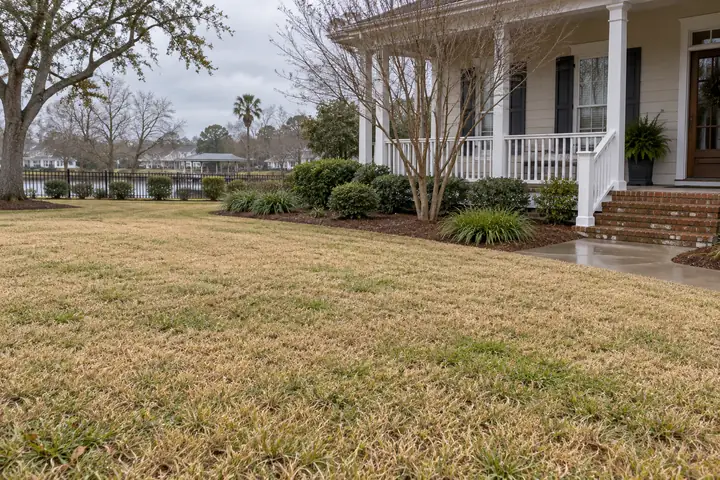
Brown in winter is not a complete diagnosis
Warm-season turf can lose green color during dormancy without the whole plant being dead. Winter injury is a different question: whether cold-related stress has damaged plant parts needed for survival and renewed growth. LSU AgCenter explains that some injury becomes apparent when surrounding turf resumes growth in spring. A brown photograph taken during a cool period cannot reliably separate those conditions by itself.
Begin with the grass identity and the seasonal sequence. Was the area already dormant before the cold event, or had it begun producing new green growth? Does the same section remain different as comparable turf nearby resumes growth? Keep those observations separate from the statement that the whole yard was brown. A lawn does not need a premature declaration of survival or failure while the relevant evidence is still developing. It needs a useful comparison and an appropriate review when the pattern warrants one.
Acclimation changes the meaning of a temperature event
LSU describes a period of adjustment as days shorten and temperatures cool. Warm-season grasses prepare for less favorable conditions, while new growth emerging later can again be more vulnerable. This is why a temperature number alone does not describe every winter injury risk. The plant's condition before the event and its stage of seasonal growth matter too. A sudden cold spell after warm growth is a different history from a settled period of dormancy.
For the homeowner, retain what the lawn was actually doing rather than reconstructing a precise biological state afterward. If the grass had visibly greened or recently needed cutting, note that. If it had remained dormant, say so. A weather report can help place the event in time, but it cannot by itself identify the condition of each plant in a sheltered or exposed part of the yard. Keep the observed lawn response connected to the weather instead of replacing it with the forecast alone.
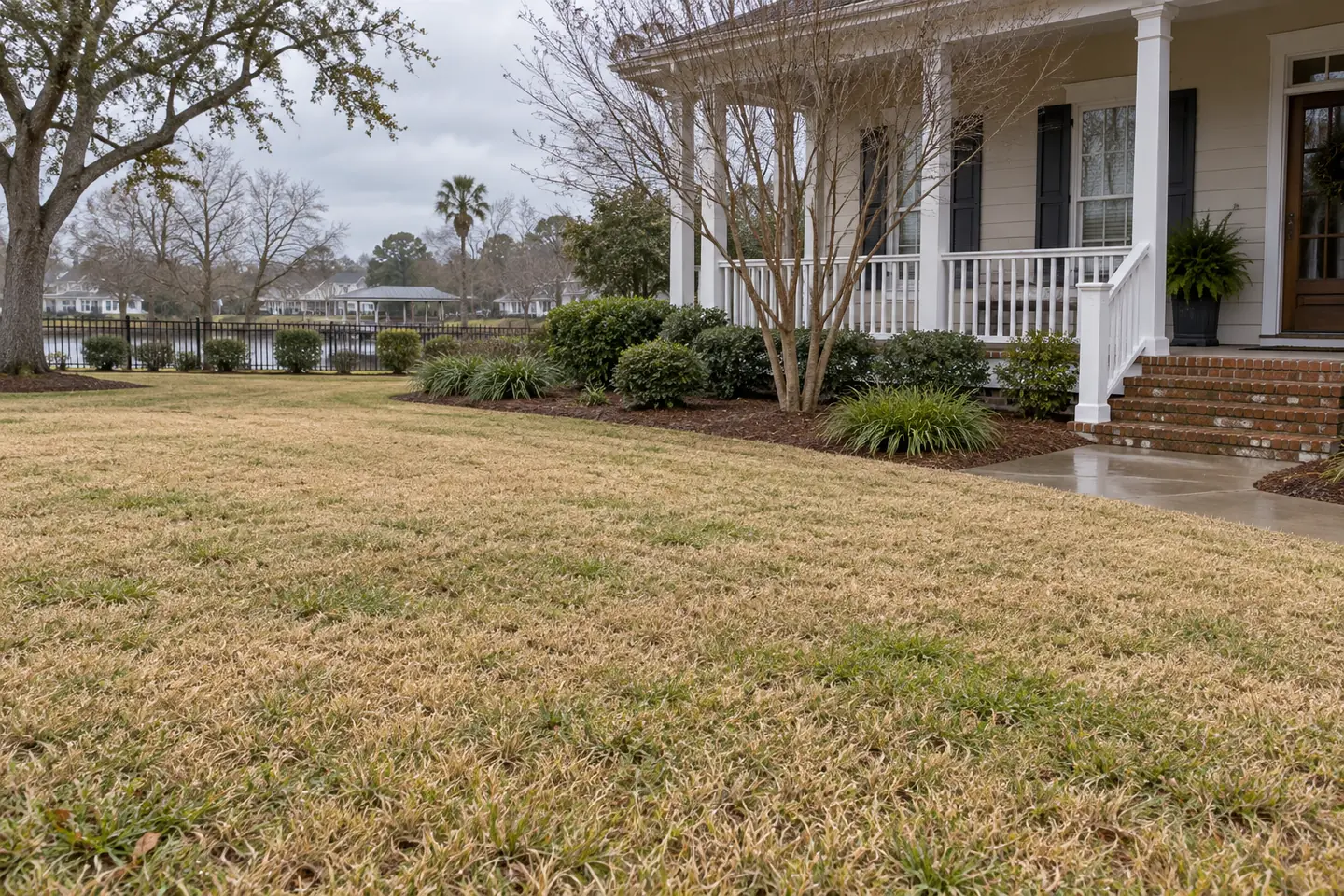
Frosted leaves and deeper plant survival are different questions
Ice on the canopy is visible; the condition of crowns, roots and spreading structures is less obvious. A leaf can look damaged without revealing the survival of every connected plant part. Conversely, an apparently ordinary dormant canopy can conceal an area that will fail to resume growth. An appropriate assessment may therefore look beyond the brown leaf tips. Do not assume that brushing away surface frost or removing old foliage answers the deeper question.
Ask which plant parts the assessor wants to evaluate and why. A photograph of the lawn surface may show distribution, while connected turf material can provide different information. If sampling is recommended, follow the receiving service's current preparation instructions. Avoid repeatedly pulling up patches simply to see whether they look alive underneath. The purpose is to obtain useful evidence with limited disturbance, not to turn a winter color concern into a series of newly opened holes.
Traffic marks can appear after the moment that caused them
LSU cautions against traffic over frozen or frosted turf and describes footprints or tire marks becoming apparent as growth resumes. That creates an important timing distinction. The day a track becomes visible need not be the day the turf was compressed. Keep any known crossing history with the observation, but do not assign a particular person or visit as the cause from the outline alone.
Useful details include: – Whether frost or frozen conditions were actually observed. – Which routes were used during that period, if known. – When the marks were first visible afterward. – Whether their pattern persists as surrounding grass changes. – Whether other injury is present outside the tracks.
Those details support a focused review. They do not prove that every line in a spring lawn came from frost. Cutting patterns, worn routes and other conditions still need consideration when the evidence does not fit one explanation clearly.
Exposure can vary within the same yard
A sheltered section near a structure and an open section exposed to wind may experience different conditions. LSU's winter guidance discusses both drying conditions and areas with excessive moisture as relevant stresses. Neither means every sheltered lawn is protected or every damp area will fail. Compare actual site features and plant responses rather than treating one regional weather event as an identical exposure across the whole property.
If a pattern follows a low area, a wind-exposed edge or a shaded section, record that relationship. Do not alter drainage or remove planting barriers merely to test a hypothesis. The observed boundary can help an adviser decide which condition deserves investigation. A contrasting section may also contain a different grass, so confirm the plant identity before using it as a survival comparison. The strongest nearby green patch is not automatically a fair reference for every brown part of the yard.
Relative cold tolerance is not a guarantee
Warm-season grasses and their cultivars differ in cold tolerance. LSU provides relative comparisons, while Oklahoma State's winterkill assessment material discusses particular bermudagrass and zoysiagrass settings. Those references help frame questions, but they do not establish survival for an individual West Bank lawn. A species described as more tolerant can still be injured, and a less tolerant species should not be declared lost without appropriate evidence.
Keep replacement discussions separate from the first color observation. Grass selection involves shade, use and other growing conditions as well as cold response. If a section repeatedly struggles, ask what the assessment has established and whether the site still fits the intended turf. Do not promise that another grass would remove every future winter problem. The immediate decision concerns the condition of the existing stand and what information is needed before repair is planned.
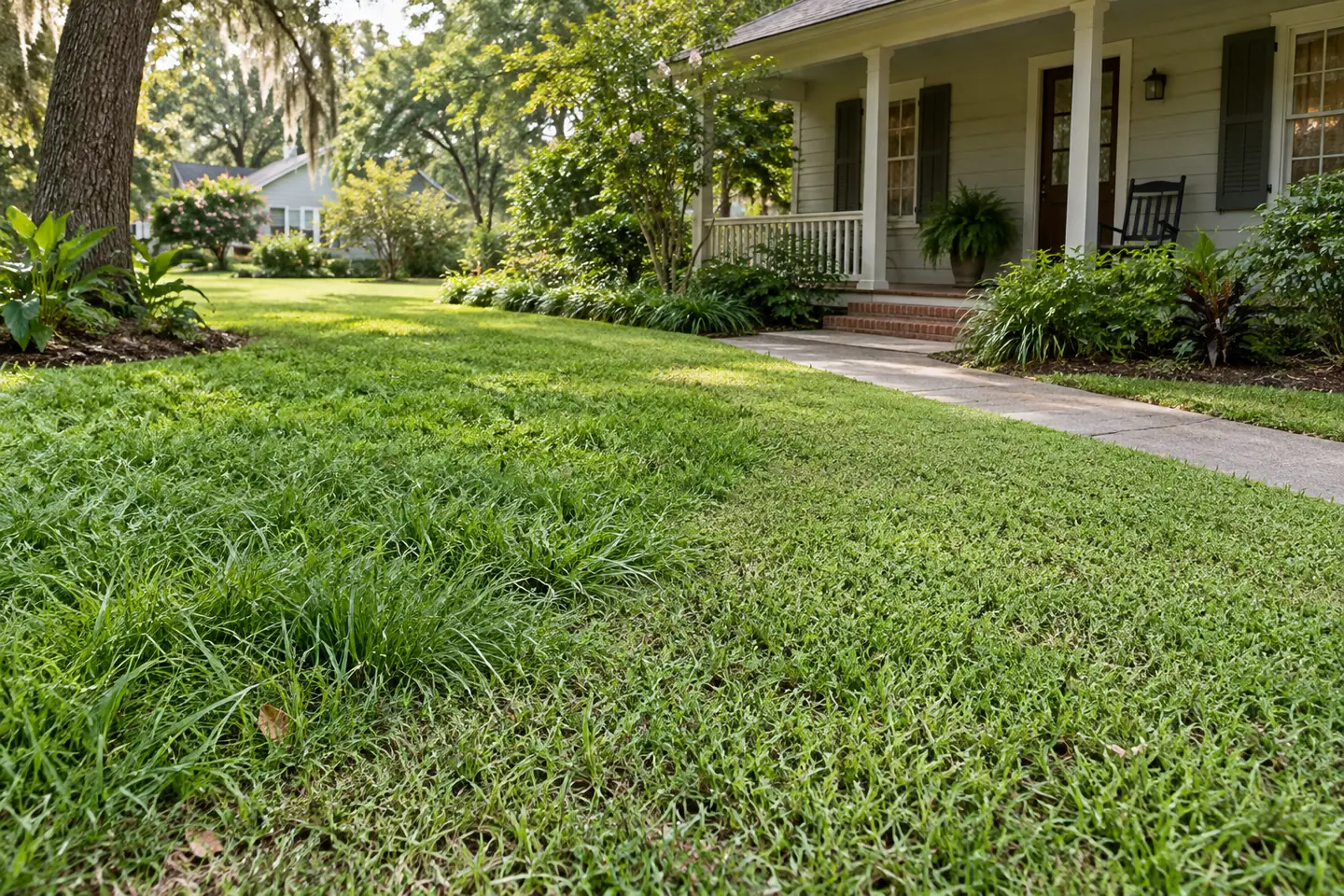
Green weeds do not establish turf survival
During a seasonal transition, other plants may provide green color while the intended lawn grass remains dormant or injured. A photograph that looks greener can therefore show a change in plant composition rather than recovery of the turf. Follow the actual grass when comparing the affected area. Seedheads, isolated shoots and a broad green weed patch should not all be counted as the same evidence of renewed lawn growth.
If the grass is beginning to grow from the edges, distinguish that from surviving plants inside the area. New coverage and survival of the original plants are different outcomes. Both can matter to a later repair decision, but they should be described accurately. A useful assessment can explain what is alive, where growth is originating and what that implies for the next step. The homeowner does not need to settle those questions solely from a distant overall view.
Avoid forcing a spring response before the lawn is ready
A desire to see green quickly can lead to an unnecessarily aggressive cut or an unplanned product application. Neither is a reliable test of winter survival. Ask an appropriate adviser what growth or assessment evidence should guide the next decision. The existing maintenance interval may need review if the turf is not producing the growth that normally justifies a visit. Keep routine work tied to the actual stand rather than a calendar date alone.
If separate repair or corrective work is recommended, confirm what it involves and when routine mowing should resume around it. Do not assume the person maintaining the lawn knows an assessment is pending. Explain the location and any specific instruction before equipment arrives. This keeps a reasonable desire for a tidy yard from accidentally removing the material an assessor intended to see or disturbing a section that needs a different plan.
Choose a follow-up based on the question still open
A later observation should ask something specific: whether the intended turf is resuming growth, whether the boundary remains distinct or whether a connected sample is still needed. Do not invent a universal green-up deadline from another state's calendar. Local conditions, grass identity and the supplied assessment determine what comparison is meaningful. Keep the earlier photographs and dates so the reviewer can see a sequence rather than one isolated brown image.
For Harvey, Marrero, Gretna, Algiers, Belle Chasse and Westwego homeowners, that approach leaves room for normal seasonal change while taking real injury seriously. The lawn's brown leaves are the beginning of the question. A useful answer follows the living plant and the actual site, then connects the next maintenance visit to what has been established. There is no need to call every dormant blade dead or promise recovery before the evidence supports it.
Arrange the agreed maintenance with Happy
Call 504-339-3571 and ask for Happy. Share any winter-injury assessment and current access or mowing instructions. Happy Grass's confirmed maintenance scope does not automatically include diagnosis, renovation, fertilization, aeration, overseeding or pest control. Separate specialist or repair work requires an appropriate provider and agreement.